

Home Design Article
Laundry Room Location Can Make Your Daily Life Much Easier
Laundry placement affects noise, convenience, storage, mudroom flow, bedroom routines, and how chores move through the home.
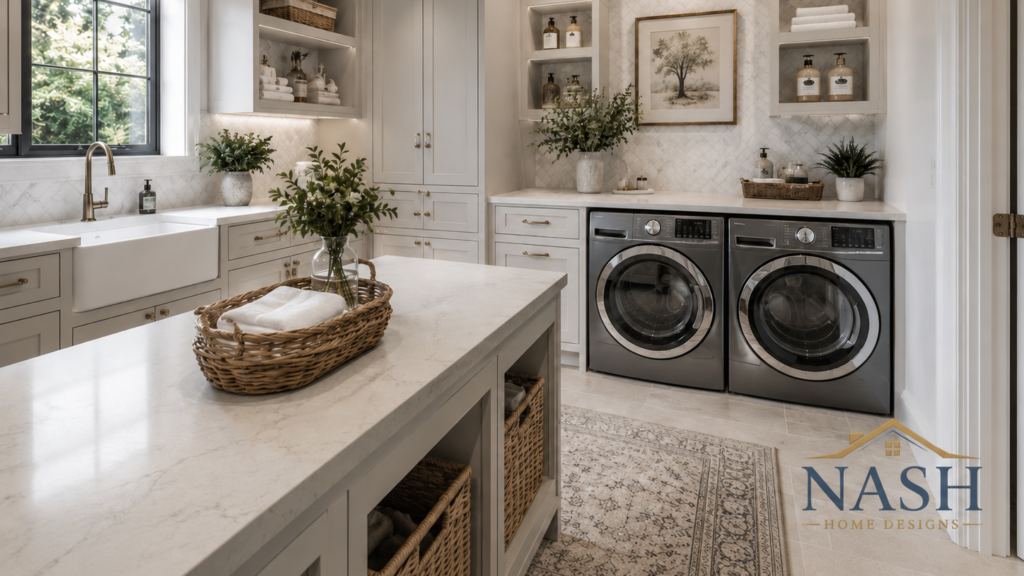
Laundry placement affects noise, convenience, storage, mudroom flow, bedroom routines, and how chores move through the home.
Good planning gives homeowners and builders a common language before decisions become expensive field questions. The clearer the issue is early, the easier it is to make decisions that fit the lot, lifestyle, budget direction, and construction path.
Laundry and mudroom planning is really about controlling daily clutter before it reaches the main living areas. Shoes, backpacks, coats, pet supplies, sports equipment, cleaning items, and laundry baskets all need a realistic path through the home. When that path is ignored, the mess usually appears in the kitchen, living room, or hallway.
Laundry Placement Can Make Daily Life Easier
Location matters as much as room size. A laundry room near bedrooms may be convenient for clothing, while a laundry room near the garage or mudroom may be better for work clothes, towels, pets, and outdoor use. The best location depends on who lives in the home and how the home will be used every day.
Noise, ventilation, folding space, hanging space, utility sinks, cabinet storage, and appliance door swings should be considered before the room is finalized. These details may seem minor on a floor plan, but they make a major difference once the room is used repeatedly.
A mudroom works best when it has defined storage rather than leftover wall space. Lockers, benches, hooks, drawers, charging areas, broom storage, and pet areas can make the transition from outside to inside much smoother.
Good utility spaces do not have to be oversized. They simply need to be placed and organized around the real daily tasks they are expected to handle.
Laundry Details That Affect The Floor Plan
Helpful planning questions include What daily routines should this design support?; Which features are must-have items, and which are flexible preferences?; Will this decision still make sense if the family, work routine, mobility needs, or budget direction changes later?; Does the plan give the builder enough clarity to price and construct the work without guessing?. Answering those questions early keeps the article topic connected to real decisions instead of leaving the idea at the level of a general preference.
A laundry room works better when it is planned around real routines. That is the kind of planning that helps a finished home feel intentional instead of accidental.