

Home Design Article
Planning Everyday Storage Where Items Are Actually Used
Discover why storage location matters in home design. Learn how placing everyday items where they're used improves convenience, organization, and functionality.
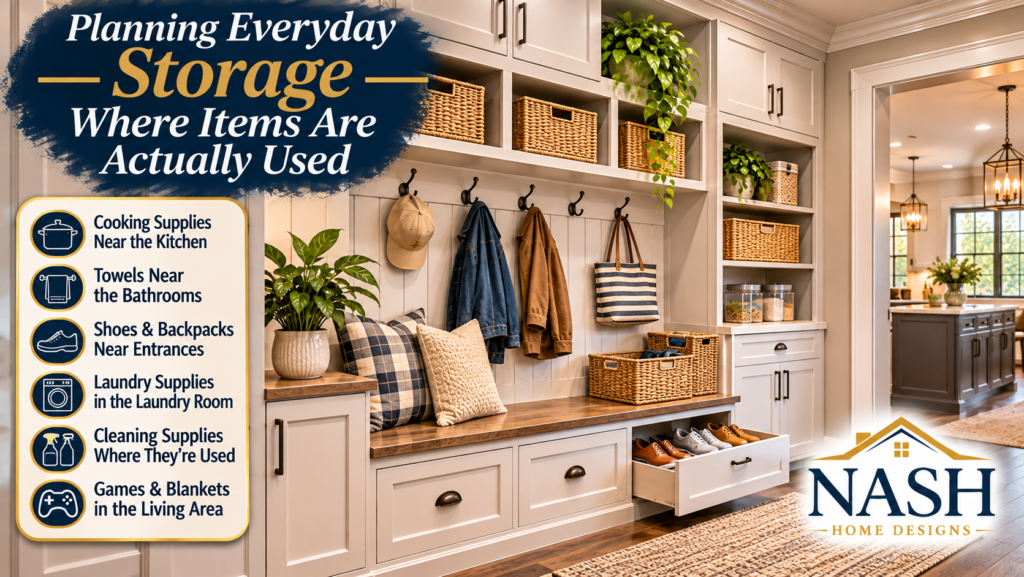
Planning Everyday Storage Where Items Are Actually Used
Why Convenient Storage Locations Can Make Your Home More Organized, Efficient, and Comfortable
When designing a new home, homeowners often focus on how much storage space they will have. Walk-in closets, pantries, linen cabinets, and utility rooms are important considerations, and it’s natural to want plenty of room for household belongings.
But there’s another important question that deserves just as much attention:
Is the storage located where the items will actually be used?
A home can have generous amounts of storage and still feel cluttered or inconvenient if everyday belongings are stored too far from where they’re needed.
For example, a large linen closet at the opposite end of the house may provide plenty of space, but it isn’t particularly convenient when someone needs a fresh towel in the bathroom. Likewise, a spacious pantry may be less practical if the most frequently used kitchen items are difficult to reach.
At NASH Home Designs, we believe thoughtful residential design isn’t simply about providing more storage. It’s about placing storage in the right locations to make everyday living easier.
Convenience Should Be Part of the Storage Plan
One of the most effective ways to improve a home’s functionality is to consider the relationship between storage and daily activities.
Think about how often you retrieve certain items throughout the day.
Cooking utensils are needed near the cooking area. Towels are needed near bathrooms. Shoes, backpacks, and jackets are frequently used near entrances.
When these items have convenient storage locations, everyday activities become more efficient.
When they don’t, homeowners may find themselves repeatedly walking across the house to retrieve belongings or leaving frequently used items on countertops and furniture simply because putting them away is inconvenient.
Good storage design should reduce unnecessary steps and make it easy to return things to their proper places.
Plan Kitchen Storage Around Daily Activities
The kitchen is one of the best examples of why storage location matters.
Kitchen cabinets shouldn’t simply be arranged according to available wall space. Their placement should also support the activities taking place throughout the room.
For example, pots and pans are most convenient when stored near the range or cooktop.
Cooking utensils, spices, and frequently used ingredients should also be located within easy reach of the food preparation area.
Likewise, dishes and drinking glasses are often most conveniently stored near the dishwasher or the area where they are regularly used.
A thoughtfully planned kitchen might include:
- Deep drawers for pots and pans near the cooking area.
- Utensil drawers adjacent to food preparation surfaces.
- Spice storage near the cooking zone, but away from excessive heat and moisture.
- Dish and glass storage near the dishwasher.
- Trash and recycling cabinets near the sink or food preparation area.
- Small appliance storage near appropriate countertop work areas.
The goal is to create a kitchen where storage supports the natural flow of everyday activities.
Keep Bathroom Essentials Close to Where They’re Needed
Bathrooms are another area where convenient storage can make a significant difference.
A beautifully designed bathroom may include attractive vanities, spacious showers, and elegant finishes, but without properly located storage, everyday items can quickly accumulate on countertops.
Consider how towels, toiletries, grooming supplies, and cleaning products will be used.
For example, towel storage near the shower or bathtub can make bathing routines more convenient.
Drawers near the vanity can provide organized locations for toothbrushes, hair accessories, and other personal items.
A dedicated cabinet for extra toilet paper and bathroom supplies can eliminate unnecessary trips to another part of the house.
Even a small recessed cabinet or properly located linen niche can make a bathroom noticeably more functional.
Design Entryway Storage Around Everyday Routines
One of the most common places for household clutter to accumulate is near the entrance.
Shoes, jackets, backpacks, purses, keys, and other belongings frequently end up on countertops, chairs, or the floor.
This often happens because the home doesn’t provide a convenient place to store these items where they naturally enter the house.
A well-designed mudroom or entryway can help solve this problem.
Depending on the household’s needs, useful features might include:
- Individual cubbies for backpacks and personal belongings.
- Hooks for jackets, purses, and frequently used accessories.
- A bench with storage beneath the seat.
- Shoe cabinets or designated footwear storage.
- Drawers for keys, sunglasses, and other small items.
- Cabinets for pet leashes, outdoor accessories, and seasonal supplies.
For many families, the entrance from the garage is used more frequently than the formal front door.
In these situations, locating everyday storage near the garage entrance may be considerably more beneficial than providing all of it in the front foyer.
Storage should follow the way the family actually moves through the home.
Make Laundry Room Storage Work With the Laundry Process
Laundry rooms are often designed with cabinets above the washer and dryer, but additional thought should be given to how the entire laundry process works.
Consider where dirty clothes will be collected, where laundry supplies will be stored, and where clean clothing will be folded or hung.
A practical laundry room might incorporate cabinets for detergent and cleaning supplies, pull-out laundry hampers, a folding countertop, and hanging space for garments that need to air-dry.
If the laundry room is located near the bedrooms, it may also be helpful to consider nearby linen storage.
For example, a laundry room positioned near the bedroom hallway could provide convenient access to towels, sheets, and other frequently washed items.
Storage located near the activities it supports can help simplify household routines and reduce unnecessary movement.
Consider Everyday Storage Near the Living Room
Living rooms and family rooms are designed for relaxation, entertainment, and spending time together.
However, these spaces often contain numerous items that need convenient storage.
Television remotes, board games, blankets, books, and electronic accessories can quickly create clutter when they don’t have a designated location.
Built-in cabinetry, entertainment centers, or concealed storage compartments can help keep these belongings organized.
For example, a cabinet near the seating area might provide storage for blankets and games.
A built-in entertainment center could accommodate electronics and accessories while maintaining a clean appearance.
In some floor plans, a nearby hallway closet or recessed cabinet might provide additional storage without requiring more furniture inside the living room.
The key is to provide storage close enough to be convenient without making the room feel crowded.
Plan Bedroom Storage Beyond the Walk-In Closet
Bedroom storage often focuses heavily on the size of the closet.
While closet capacity is important, homeowners should also consider how frequently used belongings will be accessed.
For example, clothing worn every day should be located where it can be reached comfortably.
Seasonal clothing, extra bedding, and occasionally used accessories may be better suited to upper shelves or secondary storage areas.
Nightstands and small bedroom cabinets can also provide convenient storage for books, personal items, and other belongings used near the bed.
In children’s bedrooms, appropriately positioned storage can make it easier to keep toys, books, and everyday belongings organized.
Storage systems should be designed with the intended users in mind, including safe access to shelves and drawers.
A well-organized bedroom isn’t necessarily one with the largest closet. It’s one where belongings have practical, accessible locations.
Don’t Overlook Storage for Cleaning Supplies
Cleaning equipment is frequently stored wherever space happens to be available.
Vacuum cleaners, brooms, mops, and household cleaning products may end up scattered between the laundry room, garage, and various closets.
However, considering cleaning routines during the design process can help establish more convenient locations.
A small utility closet near the main living areas may provide an ideal location for frequently used equipment.
In a two-story home, it may even be beneficial to have basic cleaning supplies stored on each floor rather than requiring everything to be carried up and down the stairs.
Cleaning products should be stored securely, particularly where children or pets may have access.
The storage area should also accommodate the actual dimensions of the equipment, including vacuums, handles, and attachments.
Think About Pet Supplies and Daily Pet Care
For households with pets, everyday storage planning should also consider food, leashes, grooming supplies, and other necessities.
A dedicated cabinet near a pet feeding station can simplify mealtime.
Likewise, hooks or drawers near the entrance used for daily walks can provide convenient storage for leashes and accessories.
A mudroom or laundry room may offer an ideal location for pet towels, grooming supplies, and other items frequently used after outdoor activities.
By incorporating these features into the original design, pet-related storage can blend naturally into the home rather than occupying valuable floor or countertop space.
Avoid Storing Everything in One Central Location
One common approach to home storage is creating a large central closet or storage room intended to accommodate a wide variety of household belongings.
While a dedicated storage room can be extremely useful, it shouldn’t necessarily replace convenient storage near daily activities.
For example, placing all cleaning supplies, linens, paper products, and household accessories in one large utility room may create unnecessary trips throughout the house.
A more efficient approach often combines centralized storage for bulk or occasional-use items with smaller storage areas located near the places those items are regularly needed.
This allows homeowners to maintain organized inventory while preserving everyday convenience.
Consider the Difference Between Frequently Used and Occasionally Used Items
Not every household item needs to be stored in a highly accessible location.
Seasonal decorations, luggage, special occasion dishes, and other infrequently used belongings can often be stored in secondary locations.
Daily necessities, however, should receive priority in the most convenient storage areas.
For example, the lower and middle shelves of a pantry might be reserved for frequently used foods, while less commonly needed items are placed on higher shelves.
Similarly, a bedroom closet may provide convenient hanging space for everyday clothing while seasonal items are stored elsewhere.
Heavy belongings should be positioned where they can be lifted and retrieved safely.
The more frequently an item is used, the more important its storage location becomes.
Use Built-In Storage to Reduce Clutter
Built-in cabinetry can be particularly effective when incorporated into the original floor plan.
Instead of relying entirely on freestanding furniture, storage can sometimes be integrated into walls, alcoves, and other appropriately sized areas.
For example, a recessed hallway cabinet might provide convenient linen storage near the bedrooms.
A built-in bench near the garage entry could incorporate concealed shoe storage.
A shallow cabinet near the dining room could accommodate serving dishes and table linens.
These features can help maintain an attractive interior while providing storage that supports everyday activities.
However, cabinetry must be planned carefully to avoid interfering with door operation, circulation, and required access clearances.
Think About How Storage Affects the Floor Plan
Storage planning should be considered alongside room arrangements, door locations, and circulation patterns.
A pantry placed too far from the primary kitchen work area may be inconvenient.
A linen closet located away from the bathrooms may require unnecessary trips across the house.
Similarly, a mudroom with plenty of cabinets may function poorly if the cabinets are positioned where family members need to walk.
Sometimes a relatively small adjustment to the floor plan can make a significant difference.
Moving a closet entrance, adjusting a cabinet layout, or incorporating shallow storage into an adjacent wall may improve convenience without increasing the home’s overall square footage.
This is one of the greatest advantages of considering storage during the initial design process.
Plan for the Way You Actually Live
Every household has different routines, habits, and priorities.
Some families need extensive storage near the garage entrance because that is where everyone enters the home.
Others may benefit from additional kitchen storage, conveniently located laundry supplies, or dedicated areas for hobbies and recreational activities.
There is no single storage arrangement that works perfectly for every home.
The most effective approach is to think through a typical day and identify where belongings are regularly used.
Ask yourself whether the proposed storage locations will make those activities easier or require unnecessary movement.
A thoughtfully designed home should support the homeowner’s lifestyle rather than force the household to adapt to inconvenient arrangements.
Better Storage Begins With Better Planning
It’s easy to focus on the amount of storage a home provides, but the location of that storage can be equally important.
A well-placed cabinet, conveniently located closet, or thoughtfully arranged mudroom can make everyday living considerably easier.
By keeping frequently used belongings close to where they’re needed, homeowners can reduce clutter, improve organization, and create a more comfortable living environment.
At NASH Home Designs, we believe good residential design is about much more than attractive floor plans and generous room sizes.
It’s about considering the everyday details that make a home function efficiently for the people who live there.
Whether you’re designing a new home or modifying an existing floor plan, thoughtful storage placement can help create a home that feels more organized, practical, and enjoyable for years to come.
Remember, the best storage isn’t necessarily the largest or most elaborate. It’s the storage that’s conveniently located where you need it most.
Planning a New Home or Modifying an Existing Floor Plan?
NASH Home Designs can help you explore practical storage solutions, efficient room arrangements, and thoughtful floor plan modifications that improve everyday convenience.
From kitchen and bathroom cabinetry to mudrooms, laundry rooms, and built-in storage, careful planning can make every square foot work harder for you.
Architectural design is our passion, but customer service is our priority.
NASH Home Designs