
Home Design Article
How to Start Planning a Custom Home from Scratch
Planning a custom home can feel exciting and overwhelming at the same time. The best way to begin is to focus on the big decisions first: budget, lot, lifestyle needs, and the type of home that will actually support how you live day to day.
How to Start Planning a Custom Home from Scratch
Planning a custom home can feel exciting and overwhelming at the same time. The best way to begin is to focus on the big decisions first: budget, lot, lifestyle needs, and the type of home that will actually support how you live day to day.
A custom home is more than a set of drawings. It is a process that connects your vision, your land, your budget, and the practical realities of construction into one finished result.
Start with your budget
Before you choose finishes, room sizes, or exterior style, decide how much you can realistically spend. Your budget should account for more than the structure itself, including land preparation, permits, design fees, utility connections, materials, and finishing work.
It also helps to leave room for unexpected costs. During a custom build, changes and site-related issues can appear quickly, and the more flexible your budget is, the easier it is to keep the project moving without stress.
Define how you want to live
Next, think about how your home needs to function. Ask yourself how many bedrooms and bathrooms you need, whether you need a home office, how often you entertain, and whether you want open gathering spaces or more privacy.
This step matters because the floor plan should match your routine. A beautiful home that does not fit your everyday life will feel frustrating later, even if it looks good on paper.
Choose the right lot
The lot influences everything from home size and shape to window placement and outdoor living areas. The slope, width, orientation, views, and setbacks all affect what type of home can be built and how the final design should be arranged.
If you already own land, use that property as part of the planning process rather than treating it as an afterthought. If you have not bought a lot yet, think about how much space you need and what kind of site will support your ideal layout.
Build your must-have list
Once the budget and lot are clearer, make a list of non-negotiables. These are the features you truly need, such as a larger kitchen, split bedrooms, a mudroom, a covered porch, or a main-level primary suite.
Then separate those from the features that would be nice to have but are not essential. This makes it easier to protect your budget and avoid overbuilding the house with extras that do not improve daily living.
Think ahead to future needs
A good custom home should work for more than just the next year or two. Consider whether your family might grow, whether aging in place matters to you, or whether rooms should be flexible enough to change over time.
Flexible spaces are valuable because needs shift. A room that starts as a playroom can later become a home office, guest room, or hobby room, which makes the home more useful long term.
Gather inspiration and style preferences
Style is important, but it should come after the functional decisions. Browse house plans, exterior styles, and interior inspiration until you can describe what you are naturally drawn to, whether that is farmhouse, Craftsman, modern, or traditional.
A clear style direction helps your designer or builder shape the home so that the exterior, interior, and overall layout all feel consistent. It also makes it easier to narrow down plan options quickly.
Work with professionals early
One of the smartest steps you can take is to involve a builder, designer, or architect early in the process. Professionals can help you identify design issues, estimate costs, and make sure the plan fits your lot and local requirements.
They can also help you avoid expensive mistakes before construction begins. Small changes are usually easier and cheaper to make on paper than after framing has started.
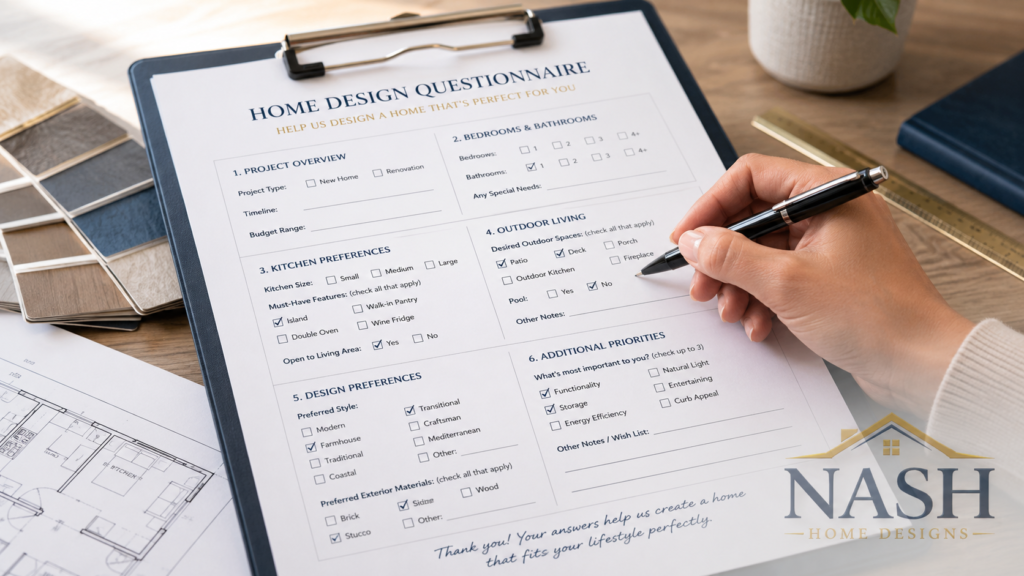
Click Here and Complete the NASH Home Designs Custom Home Design Questionnaire
Conclusion
Starting a custom home does not require having every detail figured out on day one. It does require a clear budget, a realistic understanding of your land, and a thoughtful list of features that matter most.
When you begin with those priorities, the rest of the process becomes much easier. The result is a home that feels intentional, practical, and built around your life rather than around trends alone.
FAQ
How do I start designing a custom home?
Start with your budget, your lot, and a list of must-have features. Those three choices guide nearly everything else.
What should I decide first?
Budget is usually the first major decision, because it affects the size, style, and complexity of the home.
Why does the lot matter so much?
The lot determines what can physically fit, how the home faces the sun, and how the home connects to outdoor spaces.